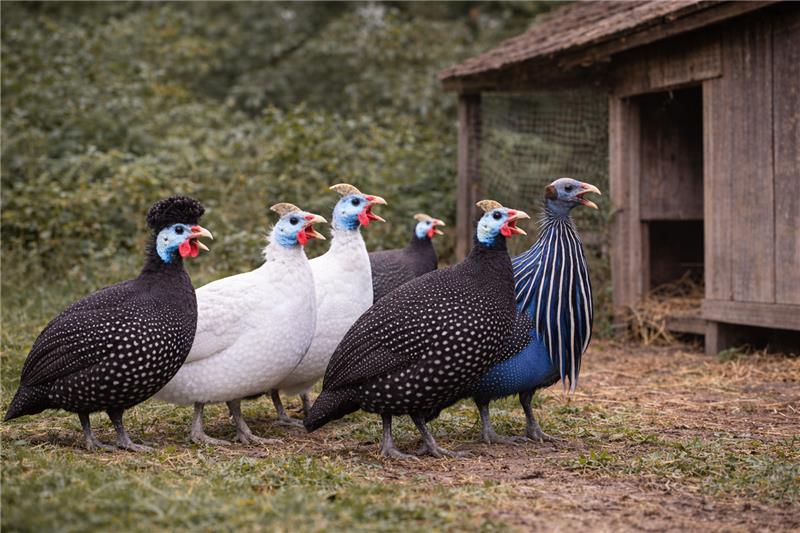
Guinea fowl are known not just for their striking plumage and utility in pest control but also for their distinctive vocalizations. Understanding their sounds can help you monitor their health, behavior, and safety in a flock.
Let’s dive in!
Types of Guinea Fowl Sounds
Guinea fowl communicate using a variety of calls, each serving a different purpose. Common sounds include:
| Sound Type | Description & Purpose |
|---|---|
| Alarm Call | A loud, harsh “kek-kek-kek” sound to alert the flock of potential predators or danger. Often the most recognizable call. |
| Contact Call | Soft clucking or chattering used to maintain contact with other flock members while foraging. |
| Mating Call | Male guinea fowl may make low, repetitive cooing or clucking sounds during the breeding season to attract females. |
| Warning/Distress Call | Sharp, high-pitched sounds when injured or threatened, signaling immediate danger to the flock. |
Why Guinea Fowl Make Sounds
Guinea fowl are highly social birds. Their vocalizations serve several purposes:
- Safety & Alarm: Alerting others of predators like foxes, dogs, or birds of prey.
- Flock Cohesion: Keeping members together while foraging over large areas.
- Reproductive Communication: Males and females use calls during mating season.
- Territorial Signals: Warn intruders away from their feeding or nesting areas.
Understanding Your Flock Through Sounds
Observing and recognizing guinea fowl sounds can help you:
- Detect predators before they attack
- Monitor health (quiet or unusual calls can indicate stress or illness)
- Track flock dynamics and social hierarchy
- Identify breeding readiness
FAQs
Why do guinea fowl make loud noises?
Loud calls are usually alarm calls to warn the flock of predators or danger nearby.
Can guinea fowl be trained to be quiet?
While you can reduce noise by providing safe housing, food, and regular flock management, guinea fowl naturally vocalize frequently.
What is the meaning of different guinea fowl calls?
Different calls serve specific purposes: alarm calls, contact calls, mating calls, and warning/distress calls.
Do guinea fowl make noise at night?
Generally, guinea fowl are quiet at night when roosting, but they may call if disturbed or threatened.